
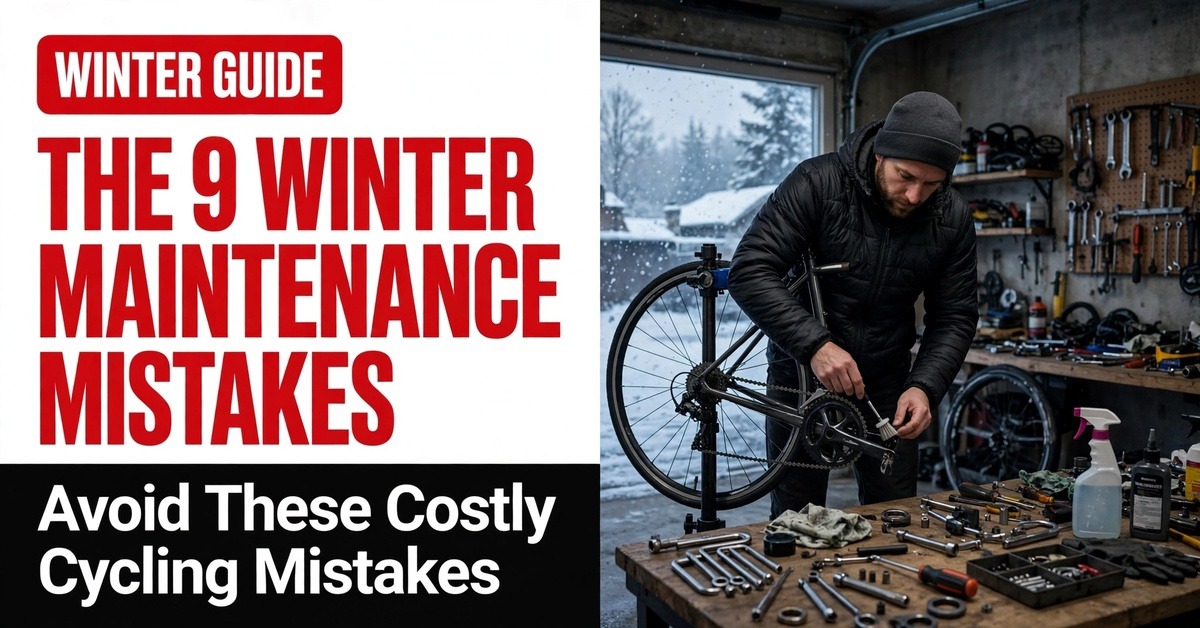
Winter can be a challenging season for bicycle maintenance. Cold temperatures, rain, mud, road salt, dust and moisture can affect your bike’s performance and damage important components.
Many amateur cyclists make small maintenance mistakes during winter without realizing the consequences. These mistakes may seem harmless at first, but they can lead to expensive repairs, poor performance, wasted energy and even dangerous mechanical failures.
Professional bicycle mechanics often notice the same problems when cyclists bring their bikes for servicing after winter.
The good news? Most of these problems are easy to prevent with a little knowledge and regular maintenance.
Whether you ride a road bike, mountain bike, hybrid or commuter bicycle, here are nine common winter maintenance mistakes and expert tips to avoid them.
1. Ignoring Chain Cleaning and Lubrication
One of the most common winter maintenance mistakes is neglecting the bicycle chain.
During winter, water, mud, road dirt and dust can collect on the chain. These contaminants mix with lubricant and create a dirty substance that increases friction between moving parts.
A dirty or dry chain makes pedalling less efficient and accelerates wear on expensive drivetrain components.
Why is this a problem?
- Increased friction makes pedalling harder.
- Chain wear increases.
- Gear shifting becomes less smooth.
- Rust can develop on metal surfaces.
- The cassette and chainrings may wear out faster.
Expert advice:
Clean your chain regularly, especially after riding in wet or muddy conditions.
Use a bicycle-specific degreaser and a suitable brush. Allow the chain to dry before applying fresh bicycle chain lubricant.
Choose your lubricant according to riding conditions:
- Wet lubricant is suitable for rainy and wet conditions.
- Dry lubricant works better in dry and dusty environments.
- All-weather lubricant can be useful when conditions change frequently.
Apply lubricant to the chain links and wipe away excess oil with a clean cloth.
Remember: A properly lubricated chain should not be covered in excessive oil.
2. Using the Wrong Tyre Pressure
Many cyclists believe that higher tyre pressure always means faster riding.
This is not necessarily true.
Incorrect tyre pressure can reduce comfort, grip and overall riding performance.
During colder weather, tyre pressure can also decrease as air temperature drops. This means cyclists should check their tyre pressure regularly rather than relying on an occasional visual inspection.
Why is this a problem?
- Underinflated tyres increase rolling resistance on some surfaces.
- Excessively high pressure can reduce grip on rough roads.
- Low pressure can increase the risk of pinch flats with inner tubes.
- Incorrect pressure can affect handling and cornering.
Expert advice:
Use a reliable pressure gauge to check your tyres before riding.
Follow the pressure range printed on the tyre and consider:
- Rider weight.
- Tyre width.
- Road or trail conditions.
- Tubeless or inner-tube setup.
- Manufacturer recommendations.
For example, mountain bike tyres generally require different pressure settings from narrow road bike tyres.
Do not automatically inflate your tyres to the maximum pressure printed on the sidewall.
The best pressure is the one that provides suitable grip, comfort and protection for your particular riding conditions.
3. Ignoring Brake Pad Wear
Brakes are among the most important safety components on any bicycle.
Unfortunately, many amateur cyclists check their brakes only when they start making unusual noises or stop working properly.
Wet and muddy conditions can accelerate brake-pad wear because dirt and small particles act like an abrasive material.
This is particularly important for cyclists who regularly ride through muddy trails or wet roads.
Why is this a problem?
- Reduced braking performance.
- Longer stopping distances.
- Damage to rims or disc rotors.
- Increased risk of accidents.
- Expensive brake-system repairs.
Expert advice:
Inspect your brake pads regularly.
For rim brakes, check the remaining braking material and look for embedded debris.
For disc brakes, inspect pad thickness and examine the rotor for unusual damage or contamination.
Also check that:
- Brake levers operate smoothly.
- Brakes engage properly.
- Wheels spin without unwanted brake rubbing.
- Brake cables and hydraulic hoses show no visible damage.
Never apply chain lubricant or oily cleaning products to brake pads or disc rotors.
If you are unsure about brake condition, ask a qualified bicycle mechanic to inspect them.
4. Washing Your Bike With a High-Pressure Water Jet
A clean bicycle looks great, but the wrong cleaning method can cause serious mechanical problems.
Some cyclists use high-pressure water jets to remove mud and dirt quickly.
Although this method appears convenient, it can force water past seals and into sensitive areas.
Important bicycle components include:
- Wheel hubs.
- Bottom brackets.
- Headsets.
- Suspension bearings.
- Rear derailleur components.
Water entering these areas can remove protective grease and contribute to corrosion.
Expert advice:
Use a bucket of water, bicycle-specific cleaner, soft brushes and clean cloths.
Follow these steps:
- Rinse loose dirt using gentle water pressure.
- Apply bicycle-safe cleaning products.
- Clean the frame using a soft brush.
- Clean the drivetrain separately.
- Rinse carefully without directing water into bearings and seals.
- Dry the bicycle with a clean cloth.
- Lubricate the chain when necessary.
Avoid directing high-pressure water at bearings, suspension seals, electrical connections or other sensitive components.
A gentle cleaning routine is much better than an aggressive wash.
5. Ignoring Chain Stretch and Drivetrain Wear
A bicycle chain gradually wears as its pins and internal surfaces deteriorate.
Cyclists sometimes describe this condition as chain stretching. However, the chain does not simply stretch like an elastic band. Its effective length increases because of wear in the internal components.
The problem is that many amateur cyclists replace their chains too late.
A worn chain can damage the cassette and chainrings, turning a relatively inexpensive replacement into a much bigger repair.
Warning signs include:
- Poor gear shifting.
- Chain skipping under pressure.
- Unusual drivetrain noise.
- Difficulty maintaining smooth pedalling.
- Excessive chain wear detected with a chain checker.
Expert advice:
Use a bicycle chain-wear measuring tool to inspect your chain regularly.
For many modern bicycle chains, replacement is recommended around 0.5% wear, particularly on 11- and 12-speed systems. Other drivetrain systems may have different recommendations.
Always check the component manufacturer’s guidance.
Replacing a worn chain at the correct time can help protect your cassette and chainrings.
6. Forgetting to Check Bolts and Fasteners
Your bicycle contains numerous bolts that hold important components together.
These include bolts on:
- Handlebars.
- Stem.
- Seatpost.
- Saddle.
- Bottle cages.
- Brake components.
- Derailleurs.
- Accessories and mudguards.
Vibration from regular riding can cause some fasteners to loosen over time.
Many amateur cyclists focus on cleaning and lubrication but forget to inspect these important connections.
Why is this a problem?
A loose handlebar, stem or seatpost can create a serious safety hazard.
Loose accessories can also produce irritating rattling noises and damage mounting points.
Expert advice:
Inspect important fasteners during routine maintenance.
Use a torque wrench when working on components that require specific tightening settings.
Always follow the manufacturer’s torque specifications.
Avoid overtightening bolts. Excessive force can damage threads, crack components or weaken lightweight carbon parts.
If you own a carbon-frame bicycle, take particular care with the manufacturer’s tightening instructions.
7. Neglecting Brake and Gear Cables
Cold and wet conditions can affect traditional mechanical brake and gear cables.
Moisture and dirt can enter cable housings, increasing friction and sometimes contributing to corrosion.
This can make braking and gear shifting feel heavier or less responsive.
Common warning signs:
- Gear changes become slow.
- Brake levers feel unusually stiff.
- Derailleur movement becomes inconsistent.
- Cables show visible rust or fraying.
- Gear shifting becomes difficult.
Expert advice:
Inspect exposed cables and their housings regularly.
Look for rust, damaged outer casing, sharp bends and frayed cable ends.
Replace damaged cables rather than waiting for them to fail.
If your bicycle uses hydraulic disc brakes or electronic shifting, follow the relevant manufacturer’s inspection and servicing instructions instead.
Do not assume every shifting or braking problem requires lubrication. Sometimes a damaged cable or incorrectly adjusted component needs replacement or professional attention.
8. Leaving Your Bicycle Wet After a Ride
Many cyclists return home after a rainy or muddy ride and simply park their bicycles.
This is a bad habit.
Leaving a bicycle wet for long periods can encourage corrosion, especially around the chain, bolts, cables and other exposed metal components.
Moisture can also remain trapped around small gaps and moving parts.
Why is this a problem?
- Rust can develop on the chain and fasteners.
- Moving components may become less responsive.
- Metal surfaces can deteriorate.
- Drivetrain components may wear more quickly.
Expert advice:
After riding in wet conditions:
- Remove mud and road dirt.
- Wipe the frame with a clean cloth.
- Dry the chain and drivetrain.
- Check exposed metal components for moisture.
- Apply suitable chain lubricant if required.
- Store the bicycle in a dry, ventilated location.
Avoid storing a wet bicycle in a closed, damp area.
A few minutes of cleaning and drying after a rainy ride can prevent expensive maintenance problems.
9. Storing Your Bicycle Without Proper Preparation
Some cyclists stop riding during winter and leave their bicycles unused for several months.
Unfortunately, simply parking a bicycle in a garage or storage room does not mean it is properly protected.
Poor storage conditions can affect tyres, chains, bearings and other components.
Dust and moisture may accumulate, while neglected mechanical problems can become worse.
Expert advice:
Before storing your bicycle for an extended period:
- Clean the entire bicycle.
- Dry the frame and drivetrain.
- Clean and lubricate the chain.
- Inspect tyres for cuts and damage.
- Check brake pads and cables.
- Inspect important bolts and fasteners.
- Store the bicycle away from rain and excessive moisture.
- Keep it away from direct sunlight and extreme heat where possible.
For longer storage, avoid leaving the tyres completely neglected. Check their pressure periodically and follow the manufacturer’s storage recommendations.
If you own an electric bicycle, battery storage requires additional attention.
Follow the battery manufacturer’s recommendations for storage temperature, charge level and periodic inspection. Never leave a damaged or swollen battery in storage.
Before your first ride after a long break, inspect the entire bicycle and test the brakes and gears.
Bonus: Your Winter Bicycle Maintenance Checklist
You do not need expensive equipment or professional mechanical skills to perform basic bicycle maintenance.
A simple routine can help protect your bicycle and reduce repair costs.
Here is a practical checklist:
| Bicycle Component | What to Check |
|---|---|
| Tyres | Pressure, cuts and tread wear |
| Chain | Cleanliness, lubrication and wear |
| Cassette | Dirt accumulation and damaged teeth |
| Chainrings | Wear and loose bolts |
| Brake pads | Remaining material and condition |
| Brake rotors/rims | Damage and contamination |
| Brake cables | Rust, fraying and smooth operation |
| Gear cables | Damage and shifting performance |
| Handlebars | Secure mounting |
| Stem | Correct bolt torque |
| Seatpost | Secure position |
| Wheels | Damage, loose spokes and alignment |
| Bearings | Unusual play or roughness |
| Frame | Cracks and visible damage |
| Battery (e-bike) | Condition and manufacturer-recommended storage |
How Often Should You Maintain Your Bicycle During Winter?
Maintenance frequency depends on how often you ride and the conditions you encounter.
A practical starting schedule is:
Before Every Ride
- Check tyre pressure.
- Test front and rear brakes.
- Inspect the chain.
- Check that wheels are properly secured.
After Wet or Muddy Rides
- Remove mud and dirt.
- Dry the drivetrain.
- Check chain lubrication.
- Inspect brakes and tyres.
Weekly (For Regular Riders)
- Inspect chain condition.
- Check tyre pressure.
- Look for loose components.
- Examine brake-pad wear.
Monthly
- Perform a more detailed inspection.
- Check drivetrain wear.
- Inspect cables and fasteners.
- Look for unusual noises or bearing play.
These are general starting points, not fixed service intervals. Frequent riders and those riding in particularly harsh conditions may need maintenance more often.
Final Thoughts: Winter Maintenance Saves Money and Improves Performance
Your bicycle does not need to be expensive to deserve proper maintenance.
Whether you own a basic mountain bike, a road racing bicycle or a high-end carbon machine, regular care is essential.
The nine mistakes discussed in this article are common because cyclists often overlook small maintenance tasks until something goes wrong.
A dirty chain, worn brake pads, incorrect tyre pressure or loose bolts may seem like minor problems. However, ignoring them can result in poor performance, expensive repairs and safety risks.
Professional mechanics understand that preventing mechanical problems is usually easier and cheaper than repairing damaged components.
Our recommendation: Develop a simple bicycle maintenance routine and inspect your bike regularly throughout the year. A few minutes of attention after each ride can save you money and help keep your bicycle performing at its best.
Ride safely, maintain your equipment and enjoy every kilometre!
Frequently Asked Questions (FAQs)
1. How often should I lubricate my bicycle chain in winter?
There is no universal interval. Clean and lubricate your chain whenever it becomes dry, noisy or contaminated. After wet rides, dry the chain and apply suitable lubricant when needed.
2. Is wet chain lubricant better for winter?
Wet lubricant is generally a good choice for rainy and wet conditions because it stays on the chain longer. However, it attracts more dirt, so regular cleaning is important.
3. Can cold weather damage bicycle tyres?
Cold temperatures can affect tyre pressure. Regularly check pressure with a gauge and inspect tyres for cuts, cracks and other damage.
4. Should I clean my bicycle after every winter ride?
Not necessarily after every dry ride. However, cleaning your bicycle after particularly wet, muddy or dirty rides helps protect the drivetrain and other components.
5. How do I know when my bicycle chain needs replacement?
A chain-wear measuring tool is the best way to check chain condition. Poor shifting, unusual noise and chain skipping can also indicate problems.
6. Can I use engine oil on my bicycle chain?
It is better to use a lubricant specifically designed for bicycle chains. Automotive oils may attract dirt and are not necessarily suitable for bicycle drivetrain conditions.
7. Should I service my bicycle before spring?
Yes. If your bicycle has been stored for several months, inspect the tyres, brakes, chain, gears, wheels and fasteners before riding. A professional service is advisable if you notice mechanical problems.
8. Does winter maintenance matter for mountain bikes?
Absolutely. Mountain bikes often encounter mud, water, dust and rough surfaces. Their chains, suspension systems, brakes and bearings need regular inspection and maintenance.
Discover more from Cycling Equipments
Subscribe to get the latest posts sent to your email.