
Introduction
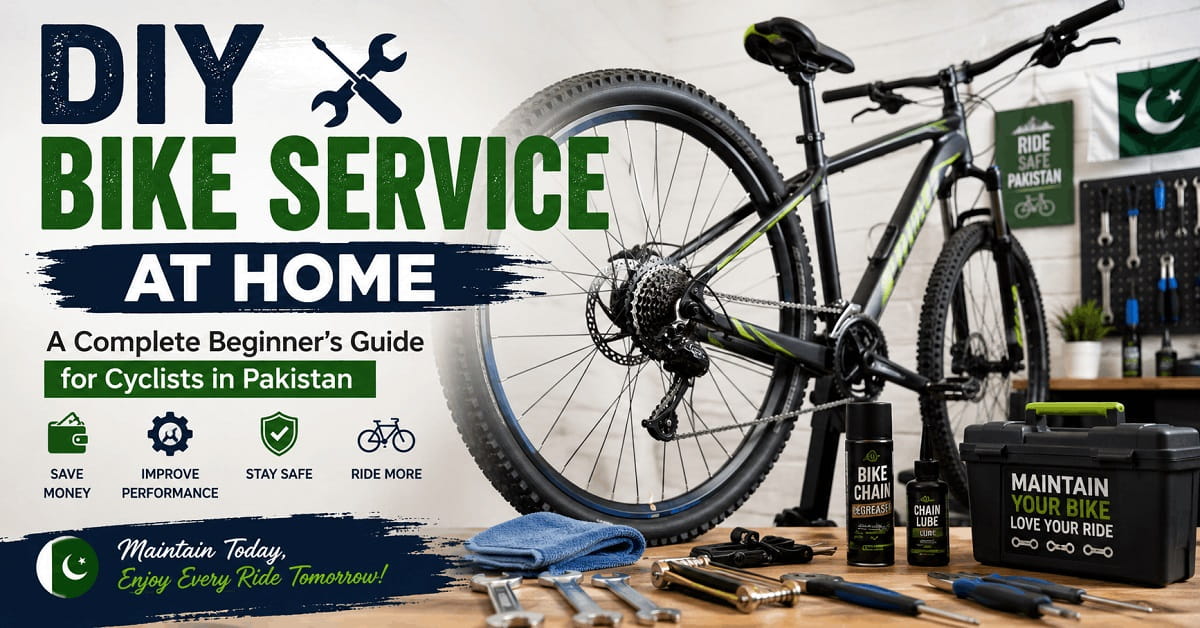
Keeping your bicycle in excellent condition doesn’t always require a visit to a bike workshop. With a few basic tools, a little patience, and the right knowledge, you can perform a complete DIY bike service at home and save both time and money.
Whether you ride a mountain bike, road bike, hybrid bicycle, electric bike, or a simple commuter cycle, regular maintenance improves safety, extends the life of your bicycle, and makes every ride smoother.
In Pakistan, many cyclists struggle to find experienced bike mechanics, especially in smaller cities. Learning how to service your bicycle at home allows you to inspect your bike regularly, identify minor issues before they become major problems, and enjoy worry-free cycling.
This guide explains everything beginners need to know about DIY bicycle servicing at home, including the tools you’ll need, how much they cost in Pakistan, and step-by-step maintenance procedures. Here is simple table of contents:
Table of Contents
Quick Summary
| Topic | Details |
|---|---|
| Difficulty | Beginner Friendly |
| Time Required | 45–90 Minutes |
| Cost at Home | Rs. 500–3,000 (depending on lubricants & tools) |
| Bike Shop Service Cost | Rs. 1,000–5,000+ |
| Recommended Service Interval | Every 2–4 weeks for regular riders |
| Full Service | Every 4–6 months |
Why You Should Service Your Bike at Home
Servicing your bicycle regularly provides many benefits.
Save Money
Professional bicycle servicing in Pakistan typically costs between Rs.1,000 and Rs.5,000, depending on the type of bicycle and work required. Performing routine maintenance yourself can significantly reduce these expenses.
Increase Bike Lifespan
Cleaning and lubricating moving parts prevents premature wear on expensive components like:
- Chain
- Cassette
- Crankset
- Bearings
- Gear system
Ride More Safely
Loose brakes, worn tires, or a stretched chain can cause accidents. Routine inspections help you identify these problems before your ride.
Better Riding Experience
A clean, properly adjusted bicycle shifts gears smoothly, brakes efficiently, and requires less effort to pedal.
📖 Read Also:
Cycling for Students in Pakistan: Benefits, Safety Tips, and Complete GuideFor students in Pakistan, learn how riding a bicycle can make daily life easier while improving physical fitness, mental well-being, and academic performance.
Tools Required for DIY Bike Service
You don’t need an expensive professional workshop. Most bicycle maintenance tasks can be completed using affordable tools.
| Tool | Purpose | Estimated Price in Pakistan |
|---|---|---|
| Allen Key Set | Adjust most bike components | Rs.500–1,500 |
| Chain Lubricant | Smooth chain movement | Rs.700–2,000 |
| Bike Degreaser | Clean drivetrain | Rs.800–2,500 |
| Chain Cleaning Brush | Remove dirt | Rs.300–800 |
| Microfiber Cloth | Wiping components | Rs.300–700 |
| Floor Pump | Inflate tires | Rs.2,000–6,000 |
| Tire Pressure Gauge | Check PSI | Rs.500–2,000 |
| Adjustable Wrench | General maintenance | Rs.700–2,000 |
| Screwdriver Set | Brake & gear adjustments | Rs.400–1,000 |
DIY Bike Service Cost in Pakistan
Your first service requires purchasing a few tools. After that, maintenance becomes very inexpensive.
Basic DIY Setup
- Allen Keys
- Lubricant
- Cleaning Brush
- Cloth
Estimated Cost:
Rs.2,000–4,000
Intermediate Setup
Includes:
- Floor Pump
- Degreaser
- Tire Pressure Gauge
- Cleaning Kit
Estimated Cost:
Rs.5,000–10,000
Although the initial investment may seem high, these tools can last for years and save thousands of rupees in servicing costs.
📖 Read Also:
Cycling in Winter in Pakistan: The Complete Guide to Safe, Comfortable & Fun Winter CyclingWinter cycling requires proper preparation. Cold mornings, dense fog, shorter daylight hours, and slippery roads can affect both your comfort and safety. This guide is all about winter cycling in Pakistan
Before You Start
Choose a clean, well-lit area where you can comfortably work.
If possible:
- Wash your hands.
- Wear gloves.
- Keep a bucket nearby.
- Avoid servicing your bike directly under sunlight.
- Place cardboard or newspaper beneath the bicycle.
If you own a bike repair stand, your work becomes much easier, but it’s not essential.
Step 1: Inspect the Bicycle
Before cleaning anything, inspect your bike carefully.
Check for:
- Loose bolts
- Cracked frame
- Rust
- Bent wheels
- Brake wear
- Tire damage
- Gear shifting issues
- Chain condition
Finding problems early saves money and improves safety.
Step 2: Wash the Bicycle
Cleaning is the foundation of every bike service.
Avoid using a high-pressure water jet, as it can force water into bearings and damage components.
Instead:
- Fill a bucket with warm water.
- Add mild bike shampoo or dish soap.
- Use a sponge to clean the frame.
- Use a soft brush around difficult areas.
- Wipe everything with a microfiber cloth.
Pay special attention to:
- Fork
- Seat stays
- Bottom bracket area
- Chain stays
- Wheels
- Handlebars
A clean bike makes it easier to identify cracks, loose bolts, or other hidden issues.
Step 3: Clean the Drivetrain
The drivetrain is the heart of your bicycle.
It includes:
- Chain
- Cassette
- Crankset
- Chainrings
- Rear derailleur
These parts accumulate mud, grease, and dust over time.
How to Clean
Apply degreaser to:
- Chain
- Cassette
- Chainrings
Let it sit for a few minutes.
Use a chain brush to scrub thoroughly.
Rotate the pedals backward while cleaning.
Continue until all black grease has been removed.
Finally, wipe everything dry using a clean cloth.
A clean drivetrain improves shifting performance and reduces wear.
Step 4: Lubricate the Chain
Never lubricate a dirty chain.
Once the chain is completely clean and dry:
- Slowly rotate the pedals backward.
- Apply one drop of lubricant to each chain roller.
- Continue rotating for one minute.
- Allow the lubricant to penetrate.
- Wipe off excess lubricant using a clean cloth.
Too much lubricant attracts dirt and shortens chain life.
Which Lubricant Should You Use?
There are two common types:
Dry Lubricant
Best for:
- Dry roads
- Dusty weather
- City commuting
Advantages:
- Cleaner chain
- Less dust accumulation
Wet Lubricant
Best for:
- Rain
- Mud
- Long-distance rides
Advantages:
- Longer-lasting protection
- Better in wet conditions
For most cyclists in Pakistan, a dry lubricant is ideal due to the generally dry and dusty riding conditions.
📖 Read Also:
How to Build a Cycling Habit: A Complete Guide for Beginners in PakistanIn this guide, you’ll learn practical strategies that work for beginners in Pakistan, along with expert advice to help you stay motivated throughout your cycling journey.
Step 5: Clean the Wheels
Dirty wheels can hide damage and reduce braking efficiency.
Clean:
- Rim sidewalls
- Hubs
- Spokes
- Tires
While cleaning, inspect for:
- Broken spokes
- Cracks
- Loose nipples
- Rim dents
- Embedded glass or stones in the tires
Also, spin each wheel to check if it rotates smoothly without wobbling.
Step 6: Check Tire Pressure
Correct tire pressure improves:
- Comfort
- Speed
- Grip
- Puncture resistance
Always inflate your tires according to the PSI printed on the tire sidewall.
As a general guide:
| Bike Type | Recommended PSI |
|---|---|
| Mountain Bike | 30–50 PSI |
| Hybrid Bike | 50–70 PSI |
| Road Bike | 80–120 PSI |
Using a floor pump with a pressure gauge ensures accurate inflation and better riding performance.
Step 7: Inspect and Adjust the Brakes
Your brakes are the most important safety component on your bicycle. Even a well-maintained bike can become dangerous if the brakes are not working properly.
Before every ride, inspect both the front and rear brakes.
Check the Brake Pads
Look for:
- Worn-out brake pads
- Uneven wear
- Cracks
- Embedded metal or stones
- Oil or grease contamination
Replace the brake pads if the grooves have disappeared or the braking surface is badly worn.
Check Brake Lever Feel
Squeeze both brake levers.
A properly adjusted brake should:
- Feel firm
- Engage smoothly
- Stop the wheel before the lever touches the handlebar
If the lever feels too loose, tighten the brake cable using the barrel adjuster or cable clamp.
Rim Brake Alignment
For bicycles with V-brakes or caliper brakes:
- Ensure both brake pads touch the rim evenly.
- Pads should not touch the tire.
- Pads should not rub the rim while riding.
Disc Brake Inspection
If your bike has disc brakes:
- Inspect the rotor for bends.
- Listen for rubbing sounds.
- Ensure the caliper is properly aligned.
Avoid touching the rotor with greasy hands, as contamination reduces braking performance.
📖 Read Also:
Cycling Routes Lahore – Complete Guide for Beginners & Experienced RidersExplore the best cycling routes in Lahore, safety tips, recommended cycling times, and expert advice for making the most of your cycling experience.
Step 8: Adjust the Gears
Smooth gear shifting makes cycling more enjoyable and reduces wear on the drivetrain.
If your chain skips gears or makes unusual noises, it may be time for a gear adjustment.
Signs Your Gears Need Adjustment
- Delayed shifting
- Chain jumping
- Clicking sounds
- Chain dropping
- Difficulty reaching certain gears
Simple Rear Derailleur Adjustment
- Shift to the smallest rear cog.
- Turn the pedals slowly.
- Use the barrel adjuster near the shifter.
- Turn counterclockwise if the chain struggles to move to larger cogs.
- Turn clockwise if the chain struggles to move to smaller cogs.
Make small adjustments—about a quarter turn at a time—and test after each change.
Check the Front Derailleur
Ensure the front derailleur:
- Does not rub the chain
- Shifts smoothly between chainrings
- Has proper cable tension
If shifting remains poor after adjustment, the derailleur hanger or cable may require professional attention.
Step 9: Inspect the Chain for Wear
A worn chain can quickly damage expensive drivetrain components.
How to Check
Inspect the chain for:
- Rust
- Stiff links
- Excessive dirt
- Stretching
A chain wear indicator tool provides the most accurate measurement, but if you don’t have one, watch for:
- Frequent chain skipping
- Poor shifting
- Visible wear
When Should You Replace the Chain?
As a general guideline:
- Every 2,000–4,000 km for regular riders
- Sooner if riding in rain, mud, or dusty conditions
Replacing a chain on time can significantly extend the life of your cassette and chainrings.
Step 10: Check the Tires
Your tires are the only part of the bike that touches the road, making them critical for safety and performance.
Inspect for Damage
Look for:
- Cuts
- Cracks
- Sidewall damage
- Worn tread
- Embedded glass
- Nails
- Sharp stones
Remove any debris carefully before your next ride.
Check for Uneven Wear
If the center of the tire is much flatter than the sides, it’s nearing the end of its lifespan and should be replaced.
Step 11: Inspect the Wheels
Spin each wheel while the bike is lifted.
Look for:
- Side-to-side wobbling
- Up-and-down hops
- Loose spokes
- Damaged rims
Minor wheel wobble can sometimes be corrected by tightening spokes, but major wheel truing is best handled by an experienced mechanic.
Step 12: Tighten All Important Bolts
Loose bolts can cause serious accidents.
Inspect the following:
- Stem bolts
- Handlebar clamp
- Seat post clamp
- Saddle rails
- Brake mounting bolts
- Derailleur bolts
- Crank bolts
- Pedals
- Bottle cage
- Mudguards
- Rack bolts
Avoid over-tightening. If available, use a torque wrench and follow the manufacturer’s recommended torque settings.
📖 Read Also:
Daily Cycling Routine for Beginners – Complete Guide for Pakistani CyclistsFor beginners, starting with a proper daily cycling routine is important. Many new cyclists make the mistake of riding too much too soon. Read this blog post to learn more…
Step 13: Check the Headset
Hold the front brake firmly and gently rock the bike forward and backward.
If you feel movement around the headset, it may need adjustment.
Also, turn the handlebars from side to side.
They should rotate:
- Smoothly
- Quietly
- Without resistance
Grinding or stiffness may indicate worn bearings that require servicing.
Step 14: Inspect the Bottom Bracket
Rotate the pedals backward.
The crank should spin smoothly.
Watch for:
- Grinding
- Clicking
- Side-to-side movement
These symptoms often indicate worn bottom bracket bearings that may need replacement.
Step 15: Check the Pedals
Inspect both pedals carefully.
Ensure they:
- Spin freely
- Have no cracks
- Are securely tightened
- Don’t wobble excessively
If using clipless pedals, clean the cleat mechanism regularly and lubricate it lightly when recommended by the manufacturer.
📖 Read Also:
Beginner Cycling Guide Pakistan (Complete Starter Guide)If you are planning to start cycling but feel confused about which bike to buy, how much budget you need, or where to ride, this complete Beginner Cycling Guide Pakistan will help you start the right way.
Final Safety Inspection
Before taking your bike out, perform one last check.
The ABC Quick Check
Many cyclists use the ABC method:
A – Air
Check:
- Tire pressure
- Tire condition
B – Brakes
Ensure:
- Brake levers feel firm
- Wheels stop immediately
- Pads contact correctly
C – Chain and Cranks
Inspect:
- Chain lubrication
- Smooth pedaling
- Tight crank arms
Spend just two minutes on this routine before every ride—it can prevent many common mechanical problems.
How Often Should You Service Your Bike?
| Riding Style | Recommended Service |
|---|---|
| Daily commuting | Every 2–3 weeks |
| Weekend rides | Monthly |
| Mountain biking | After every muddy ride |
| Long-distance touring | Before and after each tour |
| Occasional riding | Every 2–3 months |
Even if your bike is stored indoors, regular inspection helps prevent issues caused by dust, moisture, or inactivity.
Buying Tips for DIY Bike Maintenance Tools
If you’re building your own home maintenance kit, focus on quality rather than buying the cheapest tools.
1. Buy Good-Quality Allen Keys
Poor-quality Allen keys can strip bolt heads, making repairs difficult. Choose hardened steel tools with comfortable grips.
2. Use Bike-Specific Lubricants
Avoid using cooking oil or thick engine oil on your chain. Bike-specific lubricants are designed to reduce friction and repel dirt.
3. Invest in a Floor Pump
A floor pump with a pressure gauge provides accurate tire inflation and is far more efficient than a small hand pump.
4. Keep a Cleaning Kit
A simple kit containing brushes, microfiber cloths, degreaser, and chain lubricant makes regular maintenance much easier.
5. Buy Genuine Spare Parts
Whether replacing brake pads, chains, tires, or cables, choose genuine or reputable aftermarket parts for better performance and durability.
Expert Tips for Longer Bike Life
- Clean your bike after riding in rain or mud.
- Lubricate the chain every 150–250 km, or sooner if it becomes noisy.
- Store your bicycle in a dry, covered place.
- Avoid leaving your bike in direct sunlight for long periods.
- Replace worn brake pads before they damage the rims or rotors.
- Check tire pressure before every ride.
- Wipe the suspension fork after off-road rides to protect the seals.
- Keep the drivetrain clean to improve shifting and reduce wear.
- Replace cables if shifting or braking becomes stiff.
- Schedule a professional full service once or twice a year, especially if you ride frequently.
📖 Read Also:
Weight Loss with Cycling in Pakistan — Complete Beginner to Pro GuideLet’s explore a complete Pakistan-focused guide to losing weight through cycling.
Frequently Asked Questions (FAQ)
1. Can I service my bike at home without professional experience?
Yes. Most routine bicycle maintenance tasks such as cleaning, lubricating the chain, checking tire pressure, adjusting brakes, and tightening bolts can be done at home with basic tools. However, complex repairs like wheel truing, suspension servicing, or bearing replacement may require a professional mechanic.
2. How often should I service my bicycle?
It depends on how frequently you ride.
- Daily riders: Every 2–3 weeks
- Weekend riders: Once a month
- Mountain bikers: After muddy rides
- Casual riders: Every 2–3 months
Always inspect your bike before every ride.
3. How much does DIY bike servicing cost in Pakistan?
A basic home maintenance kit usually costs between Rs. 2,000 and Rs. 5,000. Once you own the tools, regular servicing costs very little, making DIY maintenance a cost-effective option.
4. What lubricant should I use for my bike chain?
Use a bicycle-specific chain lubricant.
- Dry lubricant is best for Pakistan’s dusty and dry weather.
- Wet lubricant is better for rainy or muddy conditions.
Avoid using cooking oil or thick engine oil.
5. Can I wash my bicycle with a pressure washer?
No. High-pressure water can force moisture into bearings, hubs, bottom brackets, and headsets, causing rust and premature wear. Use a bucket, sponge, soft brush, and low-pressure water instead.
6. How do I know when my chain needs replacement?
Replace your chain if you notice:
- Chain skipping
- Poor shifting
- Rust or stiff links
- Excessive stretching
- 2,000–4,000 km of riding (depending on riding conditions)
Using a chain wear indicator tool provides the most accurate measurement.
7. Is it safe to adjust bike brakes at home?
Yes. Basic brake adjustments are beginner-friendly if you follow the manufacturer’s instructions. However, if your brakes remain weak after adjustment or if hydraulic brake systems require bleeding, consult a qualified bike mechanic.
8. Which bike maintenance tools should every cyclist own?
A basic toolkit should include:
- Allen key set
- Floor pump with pressure gauge
- Chain lubricant
- Bike degreaser
- Screwdriver set
- Adjustable wrench
- Tire levers
- Patch kit
- Cleaning brushes
- Microfiber cloth
These tools are enough for most routine maintenance tasks.
9. How can I make my bicycle last longer?
Regular cleaning, proper lubrication, correct tire pressure, timely replacement of worn components, and storing your bicycle indoors can significantly increase its lifespan.
10. Should I still visit a professional bike mechanic?
Yes. Even if you perform routine maintenance at home, it’s a good idea to have your bicycle professionally inspected once or twice a year, especially if you ride frequently or participate in long-distance events.
Conclusion
Learning how to perform a DIY bike service at home is one of the best skills any cyclist can develop. Not only does it save money, but it also helps you understand your bicycle better, detect mechanical issues early, and ride with greater confidence.
With a few affordable tools and a little practice, most regular maintenance tasks can be completed in less than an hour. From cleaning the drivetrain and lubricating the chain to checking brakes, gears, and tire pressure, these simple steps will keep your bike running smoothly throughout the year.
For cyclists in Pakistan, where access to professional bike workshops may vary by city, home servicing is an excellent way to ensure your bicycle remains safe, reliable, and ready for every ride.
Whether you’re commuting to work, enjoying weekend rides, training for races, or exploring scenic cycling routes, regular maintenance will improve your riding experience and help your bicycle perform at its best.
Happy cycling, and remember—a well-maintained bike is a safer, faster, and more enjoyable bike!
🚴 Related Cycling Apps by CyclingEquipments
Use our smart cycling calculators and tools to choose the right bike, improve performance, calculate EMI, track fitness and compare bicycles easily in Pakistan.
Bike Size Calculator
Find the perfect bicycle size according to your height for a comfortable riding experience.
Use Tool →Bike EMI Calculator
Estimate monthly bike installments instantly before purchasing your dream motorcycle.
Calculate EMI →Bike Frame Size Chart
Get recommended bike frame size based on your height for better comfort and control.
View Chart →Calories Burn Calculator
Track calories burned during cycling rides and monitor your fitness progress.
Calculate →Bike Speed Calculator
Calculate cycling speed using distance and riding time with accurate results.
Check Speed →Maintenance Cost Calculator
Estimate bicycle maintenance expenses and manage your cycling budget smartly.
Calculate Cost →🚴 Explore Cycling Marketplace
Buy, sell and compare bicycles, cycling accessories and fitness equipment across Pakistan.
Browse Marketplace →Featured on Cycling Equipments
-

UGL Full Finger Cycling Gloves
₨ 1,299 Read more -

Universal Bike Pedal Lock Plates – Pair
👉 Check Price -

CST C1406 Road Bicycle Tire 700C
👉 Check Price -

3-Roll Bicycle Handlebar Tape – Flexible Road & MTB Wrap
👉 Check Price -

Lightweight Bike Carry Strap
👉 Check Price -

PJT Cycling Helmet with Sun Visor
👉 Check Price -

Premium Anti-Theft Bike Lock with 2 Keys
👉 Check Price -

Transparent Bicycle Cover for Road & Mountain Bikes
👉 Check Price
Popular Searches in Pakistan
- Cycling Helmets Price in Pakistan
- Bike Lights Price in Pakistan
- Cycling Gloves Price in Pakistan
- Mountain Bikes Price in Pakistan
- Road Bikes Price in Pakistan
- Cyclng Glasses Price in Pakistan
- Electric Bikes Price in Pakistan
- Exercise Bikes Price in Pakistan
- Folding Bikes Price in Pakistan
- Kids Bikes Price in Pakistan
- Road Bikes Price in Pakistan
- Bike Accessories Price in Pakistan
Discover more from Cycling Equipments Pakistan
Subscribe to get the latest posts sent to your email.