
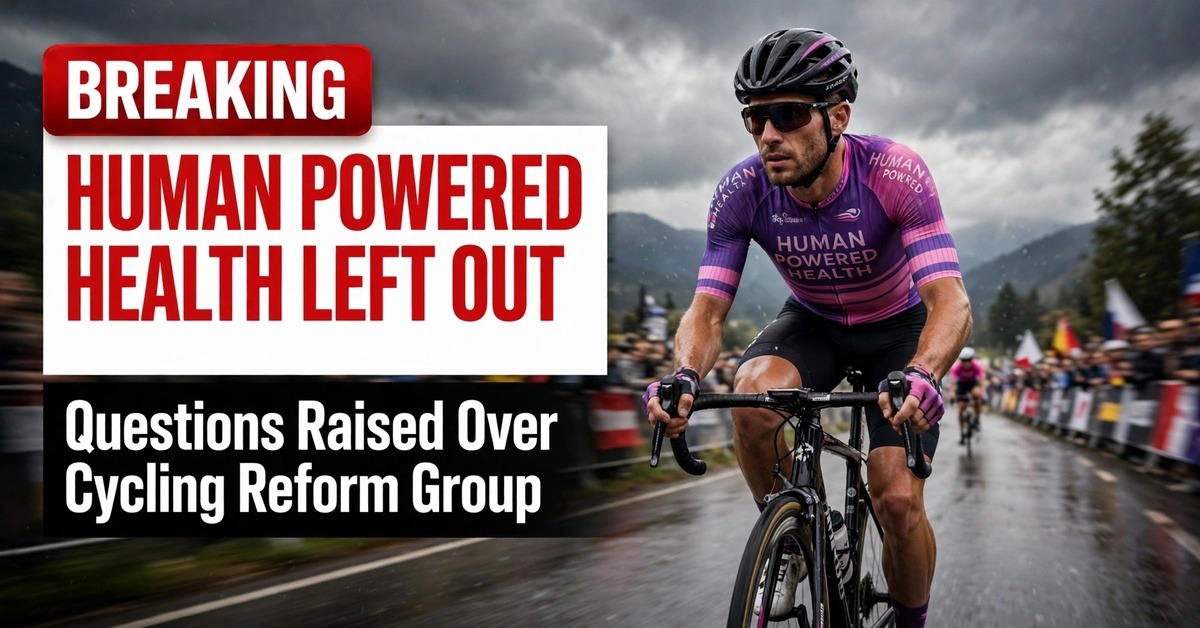
A new initiative aimed at reshaping professional cycling’s business model is facing questions about inclusivity after Women’s WorldTour team Human Powered Health revealed that it was never approached about joining the project.
The team told Cyclingnews that its senior management had not been informed about the Collective Cycling Group (CCG) and had received no invitation to participate.
The development has raised questions about how representative the new organisation will be as it seeks to bring professional cycling teams together and strengthen the sport’s commercial future.
What Is the Collective Cycling Group?
The Collective Cycling Group was officially announced in November 2026, bringing together 24 professional cycling teams from men’s and women’s WorldTour and ProTeam levels.
The organisation aims to improve the financial sustainability of professional road cycling by developing and marketing commercial opportunities collectively.
Its plans include expanding teams’ commercial rights, media and data activities, merchandising, hospitality and fan experiences.
The project is led by sports marketing executive Oliver Ciesla and follows the earlier One Cycling initiative, which failed to secure the necessary support from the UCI.
CCG says closer cooperation between teams, race organisers and cycling authorities could help increase the sport’s global visibility and create new revenue opportunities.
Human Powered Health Questions the Group’s Inclusivity
Human Powered Health’s absence is notable because the American organisation has been part of the Women’s WorldTour since 2022.
According to Cyclingnews, the team said its senior management had not been made aware of the initiative and had not been invited to join.
The situation has created a contrast with CCG’s description of the project as a broad and inclusive initiative.
In response to questions about the team’s absence, CCG said it had brought together a significant group of leading teams and remained open to expanding the organisation in the future.
The group also indicated that discussions with additional teams were continuing.
Not Every Major Team Has Joined
Human Powered Health is not the only team outside the new initiative.
Reports indicate that several prominent men’s and women’s teams have not joined the project.
Among the reported men’s WorldTour absentees are UAE Team Emirates-XRG, Red Bull-Bora-Hansgrohe, Netcompany Ineos, Jayco-AlUla and Groupama-FDJ United.
In the women’s category, UAE Team ADQ, FDJ United-SUEZ and Liv AlUla Jayco have also been reported as non-participants.
The reasons for individual teams not joining are not necessarily the same, and non-participation should not automatically be interpreted as opposition to cycling reform.
What Could This Mean for Professional Cycling?
The Collective Cycling Group arrives at a time when professional cycling is facing long-standing financial challenges.
Many teams depend heavily on title sponsors and private investment, while major commercial rights and revenue streams remain spread across teams, race organisers and other stakeholders.
CCG hopes that collective commercial activity can give teams more influence and create additional income.
However, the absence of some teams raises an important question: can a group representing only part of the professional peloton develop reforms that benefit the sport as a whole?
For women’s cycling in particular, broad representation will be important if commercial reforms are to support the continued growth of the women’s calendar and its teams.
The UCI is also developing its own reform proposals, with further discussions expected at the UCI WorldTour Seminar in December 2026.
The Road Ahead
The Collective Cycling Group has an opportunity to influence the future business model of professional cycling, but its long-term success may depend on how effectively it works with teams, organisers and governing bodies beyond its initial membership.
For Human Powered Health, the immediate issue is that it says it was never given the opportunity to join the discussions.
Whether the group expands its membership and brings more teams into the process remains to be seen.
One thing is clear: professional cycling’s next major reform effort will need more than commercial ambition. It will also need broad cooperation across the sport.
Discover more from Cycling Equipments
Subscribe to get the latest posts sent to your email.