
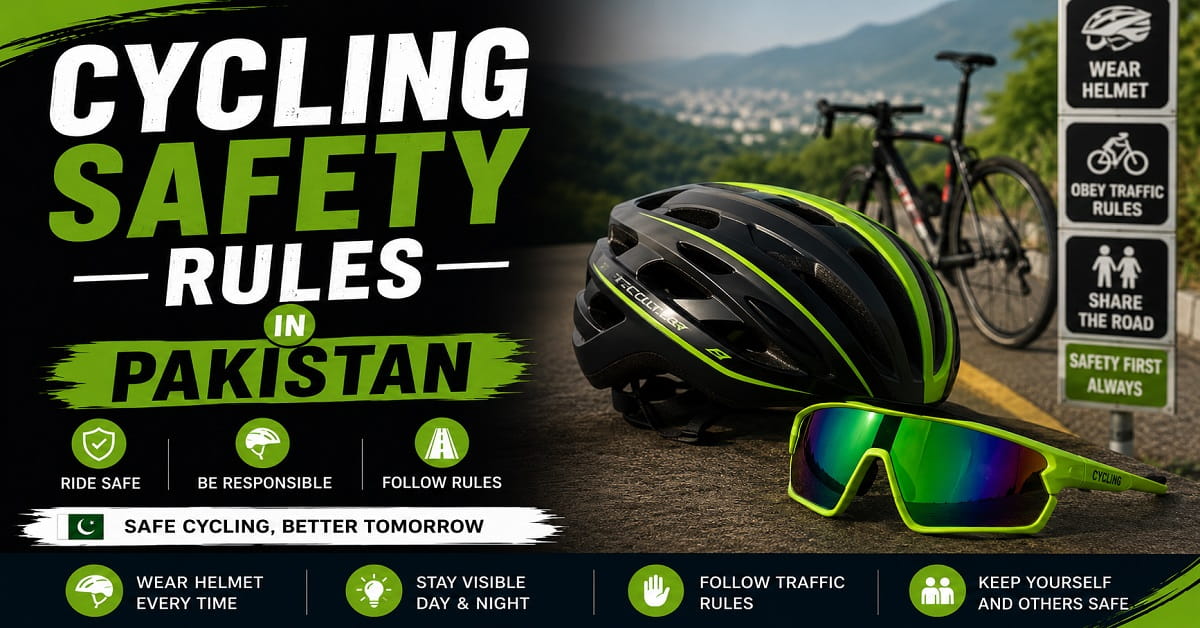
Cycling Safety Rules in Pakistan
Cycling is becoming increasingly popular across Pakistan. From daily commuters in Lahore and Karachi to fitness enthusiasts in Faisalabad, Islamabad, and other cities, more people are choosing bicycles for exercise, transportation, and recreation.
However, cycling on Pakistani roads can present unique challenges. Heavy traffic, limited cycling infrastructure, distracted drivers, and poor road conditions make safety a top priority for every cyclist.
Whether you are a beginner or an experienced rider, understanding and following cycling safety rules can significantly reduce your risk of accidents and help you enjoy a safer cycling experience.
This guide covers everything Pakistani cyclists need to know about staying safe on the road.
Table of Contents
Quick Summary Table: Cycling Safety Rules in Pakistan
| Safety Rule | Why It Matters |
|---|---|
| Always wear a helmet | Protects your head from serious injuries |
| Use front and rear lights | Improves visibility, especially at night |
| Follow traffic signals | Prevents accidents and traffic violations |
| Wear reflective clothing | Makes you visible to motorists |
| Ride on the left side of the road | Follows Pakistan traffic flow rules |
| Use hand signals | Helps communicate your intentions |
| Check brakes and tires regularly | Prevents mechanical failures |
| Avoid mobile phone use while cycling | Keeps your attention on the road |
| Stay alert at intersections | Most cycling accidents occur here |
| Carry identification and emergency contact details | Useful during emergencies |
Why Cycling Safety Is Important in Pakistan
Pakistan’s road network is primarily designed for motor vehicles. Dedicated cycling lanes are still limited in most cities, making cyclists more vulnerable.
Common risks include:
- Heavy traffic congestion
- Reckless driving
- Poor road conditions
- Unexpected obstacles
- Lack of street lighting
- Pedestrians crossing suddenly
- Motorcycles approaching from blind spots
By following proper safety practices, cyclists can greatly reduce these risks and enjoy safer rides.
1. Always Wear a Certified Cycling Helmet
A cycling helmet is the most important piece of safety equipment.
Helmets help protect your head during falls and collisions. Even a low-speed crash can result in serious head injuries if you are not wearing a helmet.
Helmet Safety Tips
- Choose a certified cycling helmet.
- Ensure a snug fit.
- Replace helmets after major impacts.
- Fasten the chin strap correctly.
- Avoid using damaged helmets.
A properly fitted helmet can significantly reduce the severity of head injuries.
📖 Read Also:
Best Selling Cycling Helmets in PakistanCheck out our featued Cycling Helmets available in your city.
2. Make Yourself Visible
Visibility is one of the biggest challenges for cyclists in Pakistan.
Drivers may fail to notice cyclists, especially during early mornings, evenings, fog, or rain.
Ways to Improve Visibility
- Wear bright-colored clothing.
- Use reflective vests.
- Install front white lights.
- Install rear red lights.
- Add reflective stickers to your bicycle.
The more visible you are, the safer your ride becomes.
3. Follow Traffic Rules and Signals
Cyclists are road users and must obey traffic laws just like motorists.
Important Traffic Rules
- Stop at red lights.
- Obey traffic signs.
- Yield when required.
- Ride predictably.
- Avoid sudden turns.
Ignoring traffic signals increases the risk of accidents and can endanger both cyclists and other road users.
4. Ride on the Left Side of the Road
Pakistan follows left-hand traffic.
Cyclists should ride on the left side while maintaining a safe distance from the edge of the road.
Avoid
- Riding against traffic.
- Swerving between vehicles.
- Sudden lane changes.
Predictable riding behavior helps drivers anticipate your movements.
5. Use Hand Signals Before Turning
Hand signals are essential communication tools.
Before changing direction, signal your intentions clearly.
Common Hand Signals
Left Turn
Extend your left arm straight out.
Right Turn
Extend your right arm straight out.
Stopping
Extend your left arm downward.
Signal early to give drivers enough time to react.
6. Inspect Your Bicycle Before Every Ride
Regular maintenance prevents many cycling accidents.
Pre-Ride Safety Checklist
✅ Check tire pressure
✅ Test front and rear brakes
✅ Inspect chain condition
✅ Ensure lights are working
✅ Tighten loose bolts
✅ Verify wheel alignment
A five-minute inspection can prevent costly and dangerous problems on the road.
7. Avoid Distractions While Riding
Many accidents occur because riders lose focus.
Avoid
- Using mobile phones
- Listening to loud music
- Texting while cycling
- Wearing noise-isolating headphones
Stay aware of your surroundings at all times.
8. Stay Extra Careful at Intersections
Intersections are among the most dangerous places for cyclists.
Safety Tips
- Slow down before crossing.
- Make eye contact with drivers.
- Watch for turning vehicles.
- Avoid blind spots.
- Be prepared to stop.
Never assume drivers have seen you.
9. Be Careful During Night Riding
Night cycling requires additional precautions.
Night Riding Essentials
- Bright front light
- Rear flashing light
- Reflective clothing
- Reflective wheel strips
- Charged batteries
If visibility is poor, consider delaying your ride until daylight.
10. Adjust Your Riding for Weather Conditions
Weather can significantly affect road safety.
Rainy Weather
- Reduce speed.
- Increase braking distance.
- Avoid painted road markings.
- Wear waterproof gear.
Foggy Conditions
- Use lights.
- Wear reflective clothing.
- Ride cautiously.
Hot Weather
- Stay hydrated.
- Carry water bottles.
- Wear breathable clothing.
Essential Cycling Safety Equipment
Every cyclist in Pakistan should consider carrying:
- Certified helmet
- Front light
- Rear light
- Reflective vest
- Water bottle
- Bicycle lock
- Repair kit
- Spare tube
- Mini pump
- Emergency contact information
These items can make your ride safer and more comfortable.
Expert Cycling Safety Tips
1. Assume Drivers Cannot See You
Ride defensively and avoid relying on drivers to notice you.
2. Leave Enough Space
Maintain a safe distance from parked vehicles to avoid suddenly opened car doors.
3. Plan Safer Routes
Whenever possible, choose roads with lighter traffic and smoother surfaces.
4. Ride Predictably
Sudden movements confuse drivers and increase accident risks.
5. Join Local Cycling Groups
Group rides often improve visibility and allow cyclists to learn safe riding techniques from experienced riders.
6. Carry Emergency Contacts
Store emergency contact information on your phone and keep a written copy in your wallet.
7. Learn Basic Bicycle Repairs
Knowing how to fix a flat tire or adjust brakes can prevent being stranded.
📖 Read Also:
Beginner Cycling Guide Pakistan (Complete Starter Guide 2026)If you are planning to start cycling but feel confused about which bike to buy, how much budget you need, or where to ride, this complete Beginner Cycling Guide Pakistan will help you start the right way.
Benefits of Following Cycling Safety Rules in Pakistan
Following proper cycling safety practices offers several benefits:
- Reduced accident risk
- Greater confidence on roads
- Better visibility
- Improved riding experience
- Protection from serious injuries
- Peace of mind for family members
Safe cycling allows you to enjoy all the health and environmental benefits of riding a bicycle.
📖 Read Also:
Weight Loss with Cycling in Pakistan — Complete Beginner to Pro Guide (2026)Let’s explore a complete Pakistan-focused guide to losing weight through cycling.
Frequently Asked Questions (FAQs)
Is wearing a cycling helmet mandatory in Pakistan?
Helmet requirements may vary by location, but wearing a helmet is strongly recommended for all cyclists regardless of age.
Can I cycle on major roads in Pakistan?
Yes, but cyclists should use caution, follow traffic laws, and choose safer routes whenever possible.
What lights should I use for night cycling?
A white front light and a red rear light are recommended for night riding.
Is reflective clothing necessary?
Yes. Reflective clothing improves visibility and significantly enhances safety during low-light conditions.
How often should I check my bicycle?
A quick safety inspection before every ride is recommended, along with regular maintenance.
Can children ride bicycles on public roads?
Children should ride under adult supervision and use properly fitted helmets and safety equipment.
Conclusion
Cycling is a healthy, affordable, and environmentally friendly activity that continues to grow in popularity throughout Pakistan. However, safety should always come first.
By wearing a helmet, using lights, following traffic rules, staying visible, and maintaining your bicycle, you can dramatically reduce your risk of accidents and enjoy a safer riding experience.
Whether you cycle for fitness, commuting, or recreation, following these cycling safety rules in Pakistan will help protect you and those around you.
Stay alert, stay visible, and enjoy every ride safely.
Featured on Cycling Equipments
-

120dB Electric Bike Horn with Alarm
👉 Check Price -

150 PSI Portable Tire Inflator – Rechargeable Air Compressor
👉 Check Price -

25L Bike Pannier Bag – Double-Sided Rear Rack Bag
👉 Check Price -

2PCS Adjustable Bicycle Rearview Mirrors
👉 Check Price -

3-Roll Bicycle Handlebar Tape – Flexible Road & MTB Wrap
👉 Check Price -

360° Adjustable Bicycle Rearview Mirror
👉 Check Price -

40 Lux E-Bike LED Headlight 6V-48V Waterproof Front Bicycle Light with Stainless Steel Bracket
👉 Buy Now -

48V Electric Bike in Pakistan – 70KM Range Adult E-Bike for Daily Commuting
👉 Buy Now
Popular Searches in Pakistan
- Cycling Helmets Price in Pakistan
- Bike Lights Price in Pakistan
- Cycling Gloves Price in Pakistan
- Mountain Bikes Price in Pakistan
- Road Bikes Price in Pakistan
- Cyclng Glasses Price in Pakistan
- Electric Bikes Price in Pakistan
- Exercise Bikes Price in Pakistan
- Folding Bikes Price in Pakistan
- Kids Bikes Price in Pakistan
- Road Bikes Price in Pakistan
- Bike Accessories Price in Pakistan
Discover more from Cycling Equipments Pakistan
Subscribe to get the latest posts sent to your email.